
2025 Art Cities Route


Cycling nodes: In Belgium and The Netherlands, there is an extensive network of cycling nodes. These nodes are the points where cycling paths intersect. Each node is numbered and you can use them to map out a cycling itinerary. Signposts with directional arrows and numbers of nodes are placed at all points where you can go in different directions.
The map on the right gives you an idea of the density of the network.
You can use several apps to plan your node "Knooppunten" route.
We're using Fietsknoop.nl which is available in 4 languages in a paid and free version.

We cycled part of the "Art Cities route" which is one of the nine Flanders "Iconic Cycle routes".
We did the part Brussels - Leuven - Mechelen - Antwerp and combined cycling in the morning with a museum visit in the afternoon using our Museum pass. This pass costs 65 euro for a 1 year free entry to 270 museums in Belgium.
We've already cycled most of the Flanders Iconic routes and this specific track between Brussels and Antwerp was still on our to do list.
In Leuven, Mechelen and Antwerp, we stayed with a "Vrienden op de fiets" host.
The GPX track of all iconic cycle routes can be downloaded from https://www.flandersbybike.com
Video on DILISTUFF YouTube channel


It's not going to rain the next couple of days and we just need to take warm clothing.
We've mounted Switch multi mounts on our Santos adventure bikes and are using our Restrap Switch panniers in the front in combination with our old Ortlieb panniers on our backrack.
Living in Halle, just 15 km's from Brussels, it's an easy ride along the Brussels-Charleroi canal to Brussels.


Day 1, afternoon - Brussels

First museum in our list is the Comics Art Museum, located in an Art Nouveau building created by Victor Horta in 1906.
It's very close to the Grand Place and the Royal district and collects anything that deals with European comics, from its beginnings to it's latest developments.


Belgium has more than 700 strip authors and it's where the comic strip has grown from a popular medium into an art in its own right.
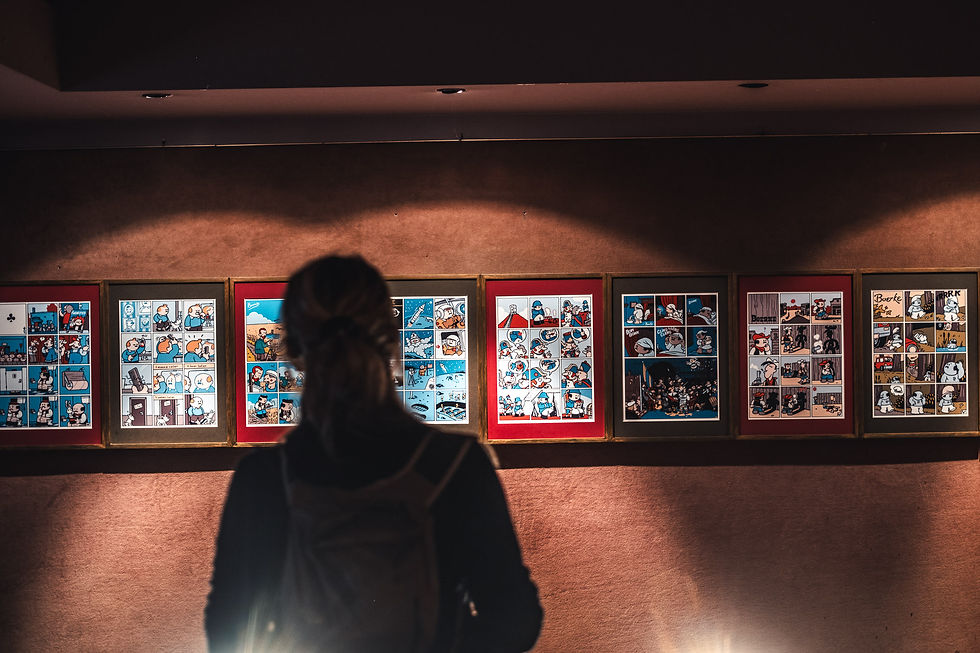
There are many Belgian strips and the ones with a worldwide audience are certainly The adventures of TinTin (Kuifje) by Hergé and The Smurfs (Smurfen) by Peyo.
In Belgium and the Netherlands, one of the most popular with more than 200 stories over the last 50 years is Luke and Lucy (Suske and Wiske) by Willy Vandersteen.


Tip: Walk some of the Comic strip trails, walking tours in different Brussels neighbourhoods passing murals of famous strip characters.
All info on the Visit Brussels site.
When we leave the museum, it's around 4.30pm and the sun is already going down. Golden hour for taking a photo of the Cathedral of St Michael and St Gudula, the main Catholic church in Belgium, serving as the seat of the Archbishop.


Walking towards the Grand Place, you cannot miss the Royal Gallery Saint-Hubert which was build in 1847 connecting the upper and lower parts of the city.
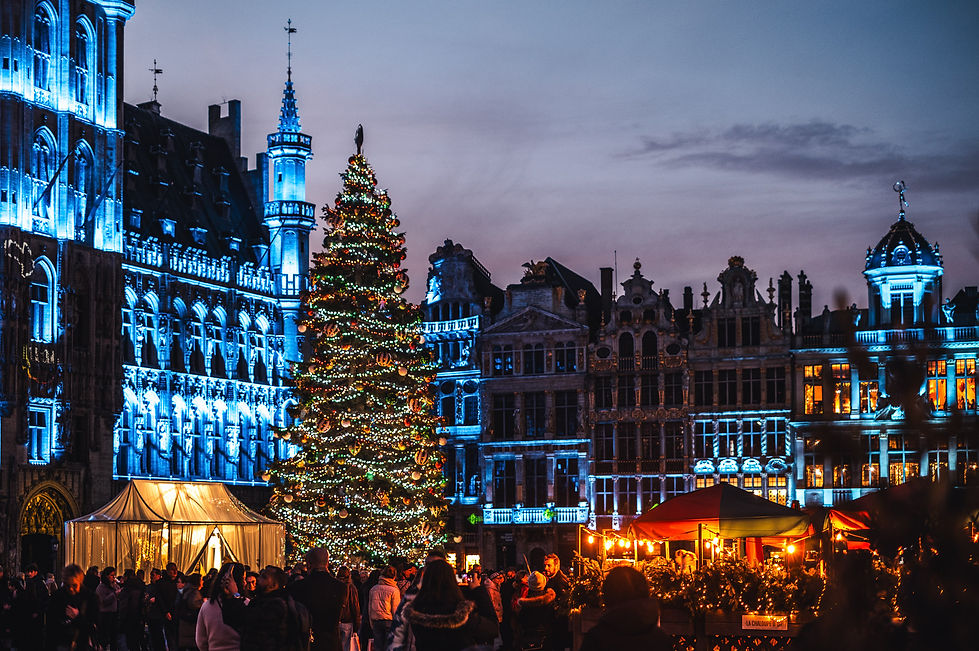


The Brussels Grand Place (French), Grote Markt (Dutch) or Grand Square is the central square of Brussels, surrounded by Baroque Guildhalls, the townhall and the neo gothic King's house, now housing the Brussels Museum.
Tip for dinner: Giulia Trattoria at the Rue de Flandre/Vlaamsesteenweg 103 near the Marché aux Porcs.
Be early or make reservation.


Day 2, morning - Brussels to Leuven - 35 km

We stayed the night in Molenbeek, at the co-housing unit where our youngest daughter lives with her friends.
While the official Art Cities route starts at the "Mont des Arts - Kunstberg", having a last look at the Grand Place seemed a better option.
What a difference with yesterday evening. So quiet now.
The route goes via the Parlement drive towards the Cinquantenaire park.


The Cinquantenaire park was built in 1880 to mark the 50th anniversary of Belgium's independence (Cinquante = 50). It has French style gardens, monuments, sculptures several museums and is dominated by a triumphal arch with a bronze chariot with 4 horses at the top.

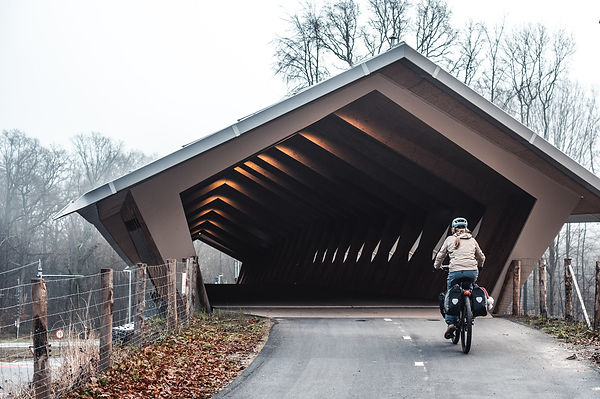
After a few km, you're in the southern part of the Sonien Forest, heading towards the new cycle bridge over the Quatre Bras, the four arms junction. This used to be the point where the works of the Brussels ring road started in the 1950's and it got it's name from the Quatre Bras Inn which used to be here.
For years, a very difficult and dangerous place for cyclists to cross the roads, a 67.5 meter wooden cycle bridge entirely made of sustainable European wood was build in 2024.


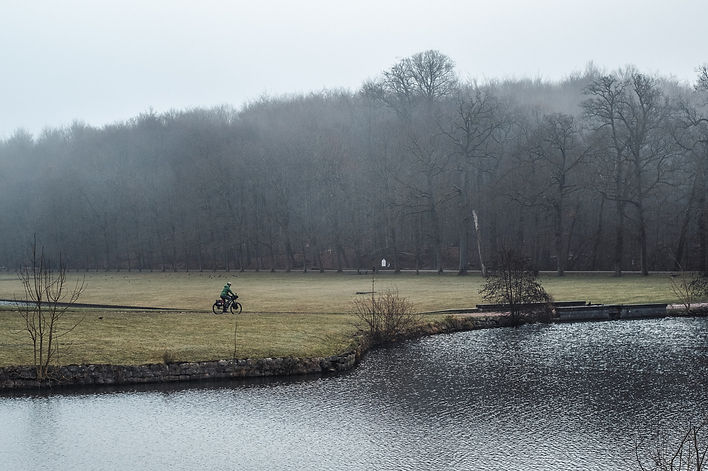

Traversing the Tervuren Park, also called Warande Park, you're getting a beautiful view of the Africa Museum.
The park is around 205 hectares and used to be the hunting grounds of the dukes of Brabant.

Just outside the Park, we're bumping in to Ernesto's coffee truck. No, we do not need a coffee but the pancakes we cannot resist.


The rest of the route today is in plain nature, all part of the National Park of Brabant forests.
We recognise the route as this part of the Art Cities route up to Leuven is also a part of another Iconic route which we did before.
The Hilly route is a 459 km route from the West to East through the South of Flanders.
Around midday, we're arriving at the Old Market in Leuven, just in time for lunch.


Day 2, afternoon - Leuven


Second museum of this trip: The Leuven University Library & Tower, build in Flemish neo-Renaissance style sits on the Monseigneur Ladeuzeplein.
Established only a few years after the founding of the university in 1425, it collected rare books and manuscripts over the centuries, only to loose them to France after the French revolution. Much worse was to come during the 2 world wars in 1914 and 1940. During the first world war, soldiers put fire to the building and it's collection. After the war, a new library with a bell tower was built with American support.
The library was destroyed again after the Nazi invasion of Belgium and rebuild brick by brick after the war.
In the Special collections and exhibition spaces, there are different temporary exhibitions, most of the time related the universities heritage.
Oh Yes, some famous scholars and professors of the university: Erasmus, Vesalius and Mercator.


As part of the visit, you can climb the five floors of the library tower with on each floor a permanent exhibition about the stirring history of the university and tower. Everybody in Leuven knows the sound of the Liberty bell, a bass-bell that weighs seven metric tons and sounds the hour every day. The carillon has 63 bells with a total weight of 35 metric tons.


Make sure to stroll around the great market square in the evening as most of the buildings are lighted up. The townhall, build in Brabantine late-Gothic style is famous for it's ornate architecture, crafted in lace-like detail.


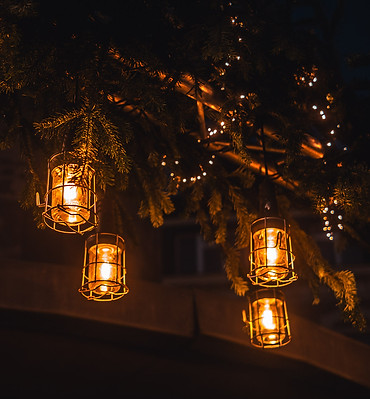
Tip for Dinner: Baracca restaurant at the Tiensestraat 34


Day 3, morning - Leuven to Mechelen - 38 km


We stayed our first night at a Belgian "Vrienden op de Fiets adress", just across the City park where we bumped into the artwork "Carriers" of Alicja Kwade. It's a big stone on top of replicas of different chairs found in the University. The originals belong to professors, students, co-workers and even 1 from the office of the University rector. The artwork represents the entire university community.

A little further, you can't miss the mural of Sanda Dia, a very unfortunate case very well known to everyone in Belgium. Sanda died at the age of 20 as a result of a hazing ritual. There was a lot of commotion around this case as most perceived that those assumed responsible for his death were overly protected from justice because of their links with important and wealthy people. A sad case for which opinions are still lingering.


Strangely enough, the Art Cities route is not going through the Leuven great beguinage. It just goes next to it. Our recommendation is to make a 5 minute detour as it's really worth it. We cycled back as we expected it to be quieter in the morning.
In the 19th and 20th century, a lot of these beguinages fell into disrepair but demolition in Leuven was prevented when the University of Leuven decided to purchase it in the 1960's.
Amongst others, it's now a residential courtyard for students and visiting professors.


Leaving Leuven via the Vaartkom, we're passing the AB Inbev global headquarters, the biggest brewery of the world.
Some of their beers : Stella Artois, Budweiser, Corona, Jupiler, Leffe, Hoegaarden, Karmeliet, Hertog Jan, Dommelsch, Belle-vue, Victoria and some 490 others.
The company's deep roots go back to brewing in Leuven since 1366, beginning with the Den Hoorn brewery, later the birthplace of the famous Stella Artois.
The remaining 35 km are all via bicycle tracks, towpath or very quiet local roads.
Upto Tildonk, next to the Leuven-Dijle canal and as from Ninde, next to the river Dijle.
At the bridge towards Ninde is a wooden statue of Damien De Veuster, better known as Father Damien or Saint Damian of Molokai. He was born in Ninde in 1840 and moved to Molokai in Hawai to take care of a leper colony.

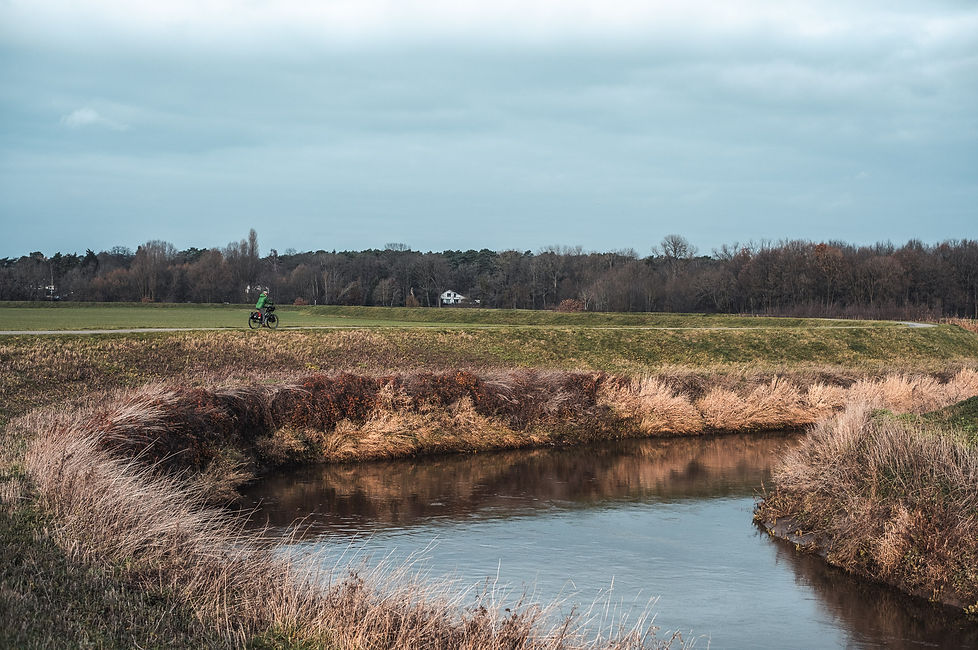

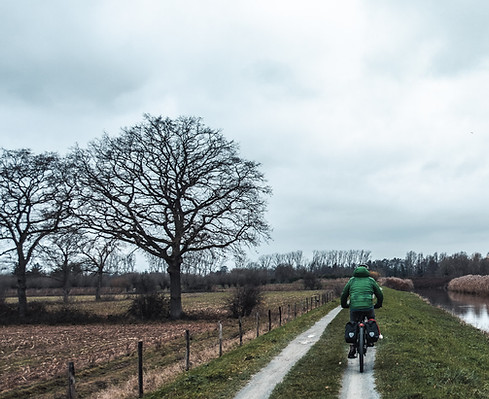

Tip for a quick lunch on the track : Het Brughuis in Muizen (5km from Mechelen)


Day 3, afternoon - Mechelen

3rd Museum of the trip: The Dossin Kazerne. The permanent exhibition focuses on the persecution of Jews, Roma and Sinti in Belgium and Northern France during the second World war. The Kazerne was used by the Nazis as a transit and deportation camp before transportation in cattle cars to the concentration and extermination camps.


"Every Name Matters"
The objective is to commemorate the 25.843 people who were deported from the Dossin Barracks.
Each name is recited and recorded by a unique participant and once the project has been completed, these recordings will be played continuously in the Memorial.
In our case, the system made a match between us and the deported person based on day and month of birth.
Our names were:

Goldkoph Nuchem Fiszel

Hirsch Recta Wolfgang Lobel

Spread over 3 floors, the permanent exhibition chronologically covers the background of antisemitic and racism laws emerging in Europe before the war, the bureaucratic systems that stripped Jews and Roma of civil rights and life under occupation.
We did not have enough time to visit the complete exhibition and will go back to continue the part about the deportation, the resistance and aftermath.
On each floor, a huge photo wall has the portraits of the victims who were deported. The museum is continuously searching for missing portraits to give every name a face.
Less than 5% of the people deported survived. Their photo's are in Sepia while the black&white photo's or silhouettes died in the camps or during deportation.

Walking back from the museum, we're passing the Saint Rumbold tower.
In 1687, a drunken guardsman thought he saw fire in the tower and started to shout "Fire, the tower is burning". When the city guards sprang in to action, it turned out that the flames were flashes from a large full moon in the fog.
From that moment, inhabitants of Mechelen were called "Maneblussers" (Moon extinguishers)
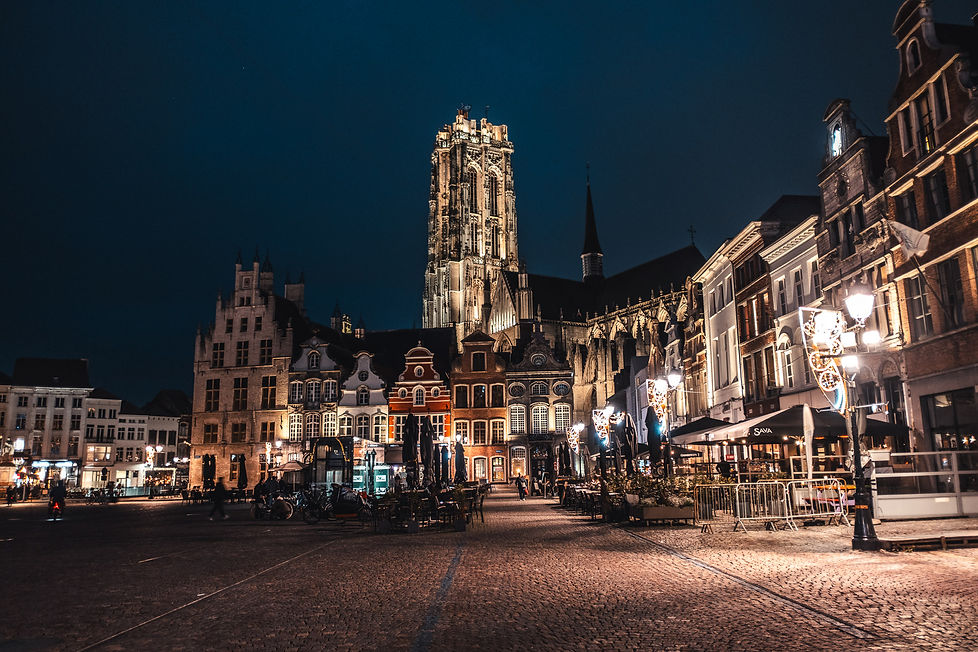
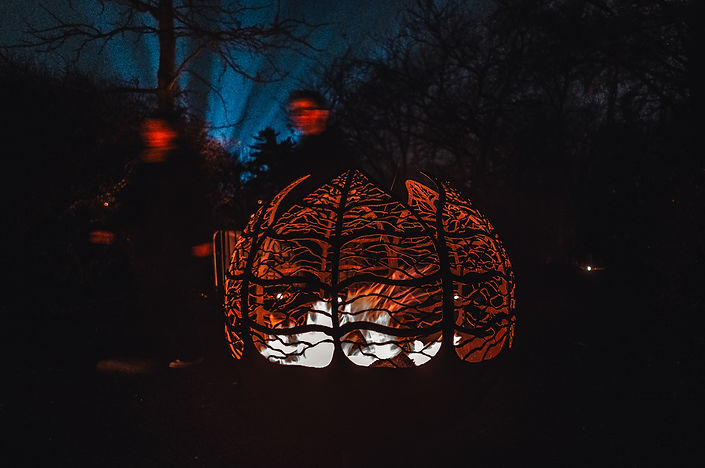
After dinner, we walked to the Botanical gardens for the annual Fire and Flame walk.


Day 4, morning - Mechelen to Antwerp - 52 km

Traditional morning photo - When we're staying at a private place, usually with our hosts on the photo.
Today, it's a slightly longer trip and we're planning to have lunch somewhere halfway, probably in Lier.
Our route goes via the "Grote Markt", the central square in Mechelen and we're lucky that it's market day.
Seeing a little trailer selling "pasteis de nata", we cannot resist.


Same as we did in Leuven, first a small detour via the beguinage. Just next to the beguinage is brewery "Het Anker" where they do not only brew the local beer, Gouden Carolus, but they also distil their own whisky.




The fastest way to cycle from Mechelen to Antwerp is 21 km via the F1 cycle highway. On the website www.fietssnelwegen.be , you have an overview which cycle highways have been completed and which ones are still work in progress or where you are following an alternate route.

The 52 km Art Cities route from Mechelen to Antwerp is making a detour via Lier.
In Mechelen, you start following the river Dijle up to Rumst where you continue to Lier alongside the river Nete.


As planned, we had lunch in Lier with a view on the Zimmer Tower, originally build as part of the 14th century city fortifications.
In 1930, astronomer and clockmaker Louis Zimmer build the Jubilee clock consisting out of 12 clocks encircling a central one, in total a clock with 57 dials.
The clock shows time on all continents, phases of the moon, times of tides, seasons, solar cycle, the zodiac and many other phenomena.

From Lier to Antwerp, you have again the option between the Cycle Highway F11 in 1 straight line to Antwerp or via the more interesting Art cities route. We're having enough time as the KMSKA museum in Antwerp is open till 6PM today.

Day 4, afternoon - Antwerp

The KMSKA, the Royal Museum of Fine Arts Antwerp, is home to countless Flemish masters and many of the art works on show were "Made in Flanders". They have a collection of close to 10.000 works of which 600 are exhibited and representing 7 centuries of Art. We have been here before for the James Ensor exhibition and this time, we're visiting the René Margritte exhibition.
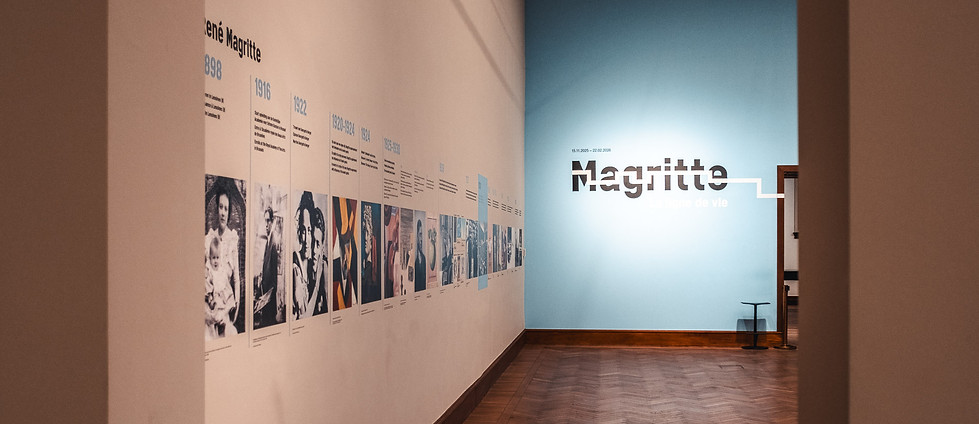


René Margritte was a Belgian surrealist artist known for his depictions of familiar objects in unfamiliar, unexpected contexts.
He was born in 1898 in Lessines, some 30 km from where we live.
Probably one of his best known paintings is the one of a smoking pipe with the text "Ceci nést pas une pipe" (this is not a pipe).


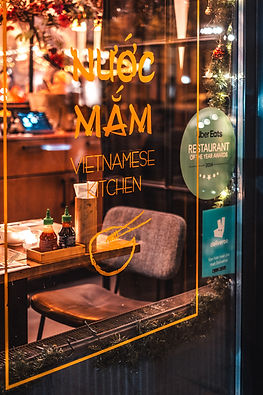
Tip for dinner near the museum : Nuoc Mam, vietnamees food (sorry, no photo's of the food).
Attn. Big portions.
Back to our lodging address by tram, the easiest way of commuting in Antwerp. All info on www.delijn.be


Day 5, morning - Antwerp

On our last day of this trip, there's no cycling and are staying in Antwerp to visit the MoMu, The Antwerp Fashion Museum.
We're starting with the Embroidering Palestine exhibition.
Embroidery, called tatreez in Arabic, is one of the most important cultural practices of Palestine.
Historically, Palestine fashion was defined by diversity with every region known for distinct textiles, styles and stitchwork.


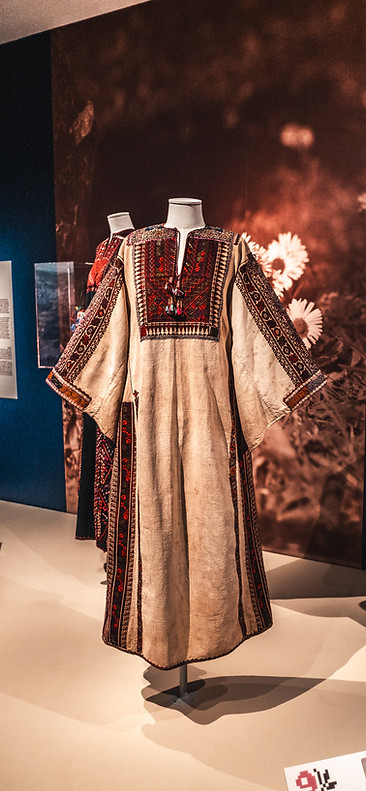
Today, embroidery's power lies in it's connection to Palestine identity. Since the Nakba, or catastrophe, of 1948, which refers to the mass displacement and dispossession of Palestinians and the establishment of the state of Israel, tatreez has become a form of cultural resistance.
Visiting the Kazerne Dossin in Mechelen just 2 days ago, reading up on the exclusion and persecution of jews which finally led to deportation and extermination, and now visiting a Palestine exhibition, reading up on the Nakba and the ongoing problems in Palestine, we can only say this is all incomprehensible to our minds.
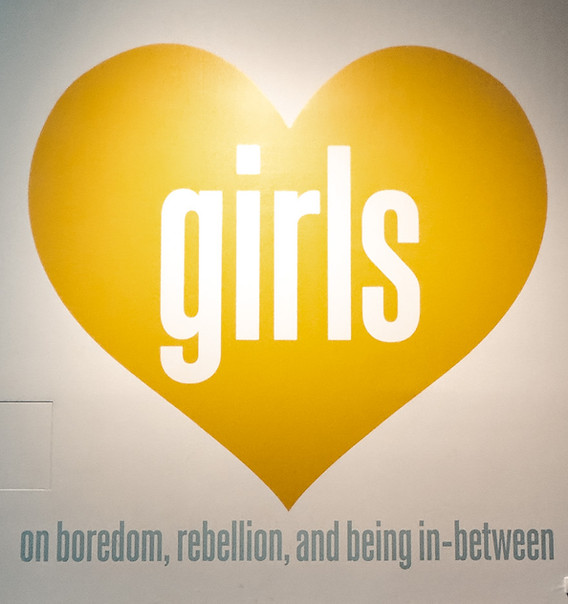

2nd exhibition is Girls. It explores the beauty and complexity of girlhood.
It delves into how memories from those formative years linger and how "the girl"continues to shape visual culture and fashion.


It's the end of this trip and before going back home, we stroll around the historical centre of Antwerp to take some photo's.


The Cathedral of Our Lady is the largest Gothic church in Belgium with it's tower rising 123 meters over the city.
Construction begun in 1352 and it was designed to have 2 towers of equal height. It finished in 1521 with the 2nd tower only reaching the 3rd string course.
The cathedral holds several works of art by Peter Paul Rubens.

Just 100 meters further is the "Grote Markt" with the Town hall as the most striking building.
In the middle of the square is the Brabo fountain which refers to the city's most famous legend. It depicts the Roman Hero Brabo throwing the Giant Antigone's hand, which he just chopped off, into the river Scheldt.
Aligning the Grote Markt are the guild houses, On top of these guild houses are statues of the saints or symbolic figures related to the specific guild's trade.


The edieval castle "Het Steen" is the oldest building in Antwerp. Over the centuries it had many functions, from castle to prison and from sawmill to maritime museum.
In front of Het Steen is a statue of "Lange Wapper", a Flemish folkloric figure whose tales were told in Antwerp. He had the ability to make himself big or small.


From the viewing terras of Het Steen, you can see the "Vleeshuis", the Butcher's guild house or literally "Meat House".
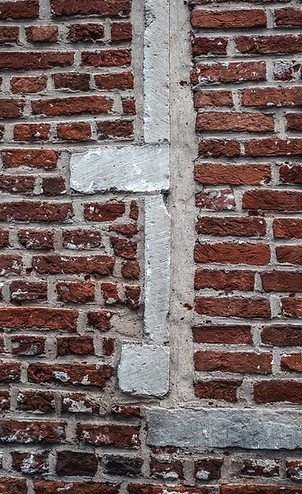
It is made of red brick and white sandstone.
The sandstone interspersed with the bricks created a brickwork known as "bacon layers"
We made our way back home by train, boarding in Antwerp Central Station, voted several times as one of the most beautiful train stations in the world.
